


 Cart
Cart
 sales@molnova.com


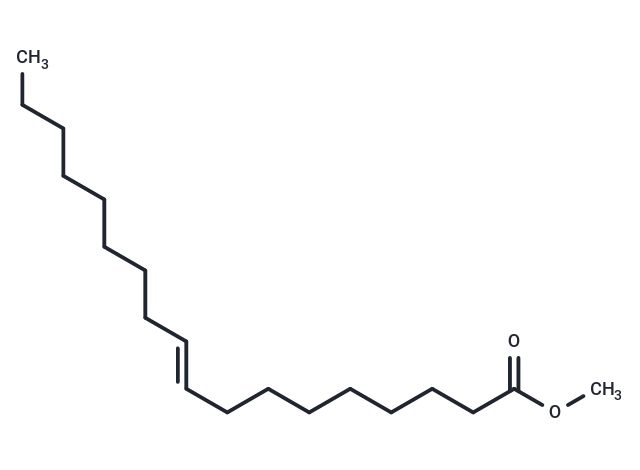
Methyl elaidate
CAS No. 1937-62-8
Methyl elaidate( —— )
Catalog No. M37808 CAS No. 1937-62-8
Methyl elaidate (Elaidic Acid Methyl Ester) is a synthetic fatty acid methyl ester used as an adjuvant in the formulation of plant protection products.
Purity : >98% (HPLC)
 COA
Datasheet
HNMR
HPLC
MSDS
Handing Instructions
COA
Datasheet
HNMR
HPLC
MSDS
Handing Instructions
| Size | Price / USD | Stock | Quantity |
| 10MG | 32 | In Stock |


|
| 25MG | 47 | In Stock |
|
| 50MG | 66 | In Stock |
|
| 100MG | 88 | In Stock |
|
| 500MG | Get Quote | In Stock |
|
| 1G | Get Quote | In Stock |
|
Biological Information
-
Product NameMethyl elaidate
-
NoteResearch use only, not for human use.
-
Brief DescriptionMethyl elaidate (Elaidic Acid Methyl Ester) is a synthetic fatty acid methyl ester used as an adjuvant in the formulation of plant protection products.
-
DescriptionMethyl elaidate is a biochemical reagent that can be used as a biological material or organic compound for life science related research.
-
In Vitro——
-
In Vivo——
-
Synonyms——
-
PathwayOthers
-
TargetOther Targets
-
RecptorOthers
-
Research Area——
-
Indication——
Chemical Information
-
CAS Number1937-62-8
-
Formula Weight296.49
-
Molecular FormulaC19H36O2
-
Purity>98% (HPLC)
-
Solubility——
-
SMILESC(CC/C=C/CCCCCCCC)CCCCC(OC)=O
-
Chemical Name——
Shipping & Storage Information
-
Storage(-20℃)
-
ShippingWith Ice Pack
-
Stability≥ 2 years
Reference
molnova catalog



related products
-
Fenoprofen Calcium
Fenoprofen Calcium is a nonsteroidal, anti-inflammatory antiarthritic agent.
-
Moscatin
Moscatin exhibits antiplatelet aggregation activity.
-
Acegastrodine
Acetagastrodin has an antispasmodic effect on vascular smooth muscle.
